North Korea faces food shortages as drought threatens crops
April 30, 2026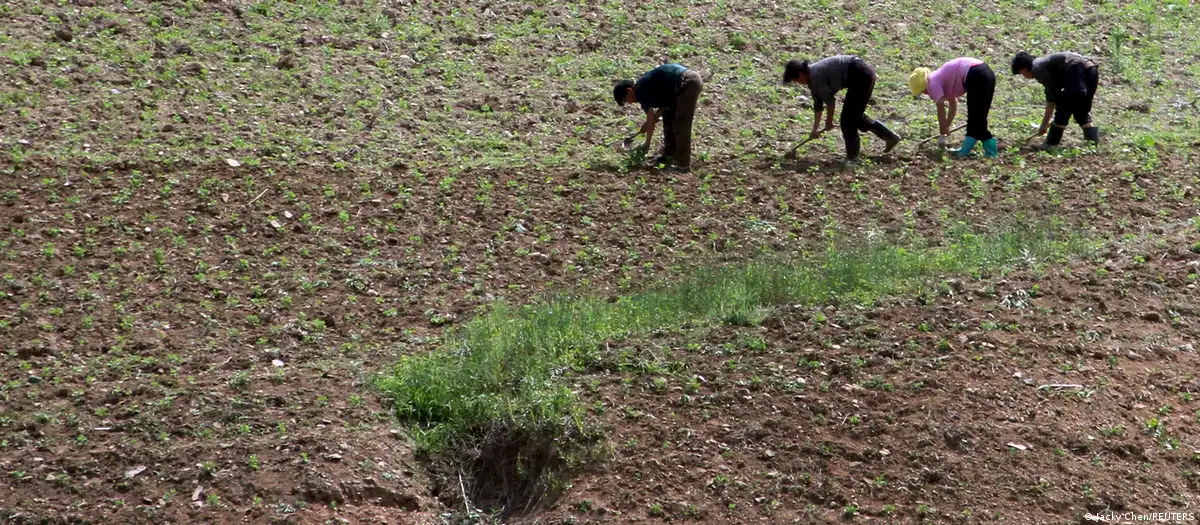
North Korea is rushing to shield its crops from a "severe" drought that has hit the country, its state news agency reported on Thursday.
The largely isolated country, with its lack of strong infrastructure, is particularly susceptible to the impacts of natural disasters.
North Koreans have long struggled with food insecurity due to extreme weather, worsened by sanctions, border closures, and limited farm inputs.
What did North Korea say about its drought?
"An unusual drought has recently persisted across much of the country, a phenomenon rarely seen in previous years," Pyongyang's official Korean Central News Agency (KCNA) said.
"Workers across various regions are concentrating all efforts on protecting early-season crops from the drought," it added.
KCNA reported that North Korean cities and counties were carrying out "repairs to the gates of reservoirs and waterways," and implementing "technical measures" to boost drought resistance of wheat and barley.
In February, UN Special Rapporteur on human rights, Elizabeth Salmon, had said that food shortages were already a key concern. UN agencies say millions in North Korea are undernourished and vulnerable to disasters such as droughts and floods.
Crop-protection measures
In another report, KCNA said North Korean Premier Pak Thae Song went for on-site inspections at farms in South Pyongan and North Hwanghae provinces to check on the "countermeasures to minimize drought damage."
Pak called for farm workers to identify and efficiently use all water resources available. He emphasized that a successful harvest hinged on overcoming this year's drought, KCNA said.
South Korea was also hit by a drought last year, affecting the Gangneung province. It also recorded its hottest summer. Both the north and the south had their hottest Junes on record.
North Korea's frequent power shortages also meant people lacked access to air conditioning to cool themselves down.
Climate change, caused primarily by human emissions of CO2, has increased the frequency and intensity of extreme weather.
Edited by: Alex Berry