India news: Jet fuel prices reach record high amid Iran war
Published April 1, 2026last updated April 1, 2026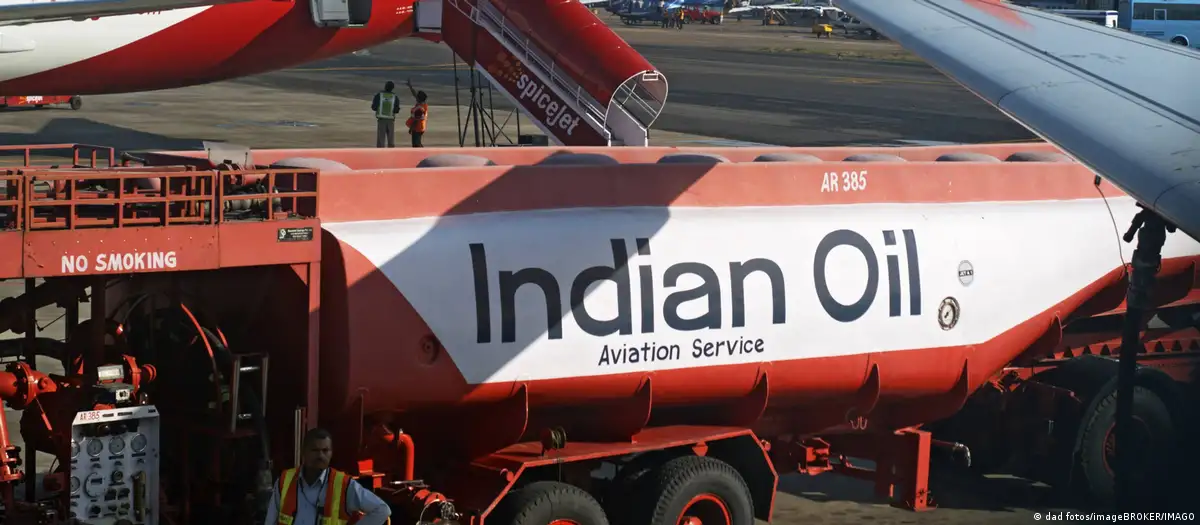
What you need to know
- Indian oil companies hike price of commercial liquefied petroleum gas (LPG) cylinders
- LPG is widely used in cooking across the hospitality sector
- Jet fuel prices reach a record high amid the energy crisis due to the Iran war
- Government intervenes to stagger the rise in jet fuel price for domestic flights
- India kicks off population census
- Citizens have 15 days to fill out the survey online
The blog has now closed.Here's a roundup of the news from India on Wednesday, April 1:
Thanks for reading and see you tomorrow!
Thanks for turning to DW for the latest news from India.
We are closing our blog for today, Wednesday, April 1, but look forward to bringing you all the latest first thing tomorrow morning.
No crude-for-LPG deal with Japan says Indian official
Sujata Sharma, joint secretary of India's Ministry of Petroleum and Natural Gas, said Wednesday that Delhi had not exchanged crude oil for LPG with Japan.
"I am not aware [of a swap]. Our rules do not allow crude oil for LPG exports," she added.
Last week, Reuters news agency had reported that INPEX, Japan's largest oil and gas company, had been mulling whether to supply liquefied petroleum gas (LPG) to India in exchange for naphtha and crude oil.
Has Pakistan outplayed India in Iran war diplomacy?
The US-Israel war with Iran has resulted in mounting fuel shortages in India, its rupee currency is under pressure, and millions of Indians working in the Gulf are watching events unfold with growing anxiety.
However, one month into the conflict, it is Pakistan, not India, that is positioning itself as a mediator.
Delhi mayor receives bomb threat by email
A bomb threat gripped the New Delhi mayor's office on Wednesday after it received an email saying "Bomb Blast in Mayor's Office at 2.11," local media reported.
Authorities including the Bomb Detection Team, Bomb Disposal Squad and Dog Squad were conducting a thorough search of the building. While the search is ongoing, no explosive device has been found yet.
Police authorities said the anonymous message was sent via Gmail.
It contained slogans like "Delhi banega Khalistan" which translates to 'Delhi will become Khalistan'. Another slogan said "Khalistan sikkha de dushman Modi-Shah-Jaishankar," referring to Indian Prime Minister Narendra Modi, Home Minister Amit Shah and Foreign Minister Subrahmanyam Jaishankar.
The so-called Khalistan movement refers to a separatist movement for the independence of the northern state of Punjab. It dates to India's 1947 independence and has been blamed for the assassination of a prime minister and the bombing of a passenger jet.
In the present day, the movement's most vocal proponents are not in India but in Western nations with large Sikh populations such as Canada and the US.
Earlier this year, about a dozen schools in Delhi received similar worded bomb threats by email. They were later declared a hoax.
Lower custom duty kicks in for export zones to sell locally
India will grant a temporary customs duty relief for goods manufactured in Special Economic Zones (SEZs) and sold domestically, the government has said.
SEZs are zones primarily set up for exporters, which allow them to import raw materials without customs duties.
Under the order, these exporters will be able to sell a share of their goods to the Indian market without having to pay a full import tax. These goods include chemicals, engineering goods, heavy machinery, textiles, footware, pharmaceuticals and electronics.
The move is meant to cushion exporters battered by steep US tariffs and higher shipping costs amid the Middle East crisis.
The one-time concession took effect on Wednesday and will remain in place for a year.
India launches long-awaited population census 2027
India launched the world's largest population census which will see over three million officials take part in a long-awaited data-collection exercise critical for future policies.
This round of census was meant to take place in 2021 but was delayed due to the COVID-19 pandemic. The last census was conducted between 2010-11. India is constitutionally mandated to hold a census, typically every 10 years.
India recored a population of 1.21 billion in the last census. It is now thought to be home to more than 1.4 billion, making it the world's most populous nation.
The first 15 days have been allocated for a self-enumeration where citizens will be able to submit their own details online, in a first for India.
The census has traditionally involved collecting data on paper, which is later digitized and published by the government.
After the first 15 days, the census will break into two phases. The first will involve the physical collection of data on houses and household conditions. The second will focus on the inhabitants of the houses and their social and economic parameters.
The data collection will take up to a year. Once published, it will impact Indian policies and social intervention programs for the next decade.
Caste data and the Indian census
The census will also record data on caste, a rigid social hierarchy coming from India's dominant Hindu religion. The caste system dates back thousands of years and is deeply entrenched in Indian social life and politics.
While the 2011 census did collect caste data, it was not fully published over concerns of accuracy. Those in favor of a caste census say the information is vital to ensure government assistance to those from disadvantaged castes. Critics say caste has no place in a country aiming to be a major world power.
Iran war hits India's condom makers: report
The impacts of the US-Israel war with Iran is being felt beyond gas prices, and are creeping into Indian bedrooms.
According to a report by news outlet The Indian Express, the country's condom manufacturers are facing severe supply chain disruptions and a steep rise in cost of raw materials.
Petrochemicals are a key ingredient in the production and packaging of condoms.
In March, the Indian government announced a reduction in petrochemical production in response to the closure of the Strait of Hormuz. It was meant to ensure resource allocation to high-priority sectors like fuel and LPG.
Supply constraints from the Middle East and price volatility were impacting condom makers, the report said, citing industry sources. They warned that any increase in condom prices could directly impact family planning and population control in what is already the world's most populous nation.
India's condom industry runs on a high volume and low-margin business model, as Indians are price-sensitive towards the product.
Trump deeply cares about India-US ties, says US ambassador
The US Ambassador to India, Sergio Gor, said that US President Donald Trump "deeply cares" about ties between the two countries on Tuesday, after a meeting at the White House.
"Back in the US for a few days. First stop, meeting with our GREAT President in the White House. The President deeply cares about the relationship between the US and India," he said on X.
The post included a picture of the ambassador with Trump and US Secretary of State Marco Rubio in the Oval Office.
"My vision is to transform the US-India relationship into the defining strategic partnership of the 21st century, one that delivers tangible benefits for both our nations," Gor had earlier said in an interview.
New Delhi and Washington maintain strong trade and strategic ties but have faced negative undercurrents over the past year.
Last year, Indian Prime Minister Narendra Modi was locked in a diplomatic tussle with Trump after clashes between India and Pakistan over a attack on civilians in Indian administered Kashmir.
India maintained that the clashes came to an end after direct talks between the armed forces of India and Pakistan, but Trump repeatedly took credit for mediation.
Trump claimed he had threatened the nations with higher trade tariffs, which led to a ceasefire, which India denies. Pakistan has thanked Trump for brokering a ceasefire between the neighbors.
The US and Israel's war in Iran has also adversely impacted India's energy security. India maintains a neutral stance between the US, Israel and Iran, but has consistently called for an end to the hostilities.
At the same time, Trump and Modi have shared friendly hugs and phone calls. In early March, the US waived sanctions on Russian oil, first for India and then for the rest of the world, to assuage supply concerns. Washington has called India a "good actor," emphasising the importance of their relationship.
Indian opposition slams government for rising price of essentials
The President of India's largest opposition party has criticized Prime Minister Narendra Modi's government for the rising cost of everyday essential items like food, fuel and medicines.
Indian National Congress' Mallikarjun Kharge said: "The Modi government has completely wrecked the country's strategic and economic policies, and the direct consequences are being borne by 1.4 billion Indians."
Commercial LPG cylinders, aviation turbine fuel, over 900 essential medicines, toll tax and goods made of plastic, steel and ceramics were all affected, he added.
India, along with several Asian countries, is facing rising costs of fuel and goods stemming from supply chain disruptions due to the war in Iran. Kharge, however, accused the government of "looting" the common people in tough times.
"While the country's common people, our farmers and laborers, and MSME industries remain trapped in hopes of relief, the BJP leadership is completely focused on fleecing the public and looting them in times of crisis," he said.
Oil companies raise price of commercial LPG cylinders
Indian oil companies increased the price of liquefied petroleum gas (LPG) cylinders for commercial use by Rs 195.5 ($2.1, €1.8) on Wednesday, amid rising energy costs due to the Iran war.
A commercial gas cylinder now costs Rs 2,078.50 ($22.3, €19.26) in the national capital.
Public oil companies revise the rates of their products, such as cooking gas and jet fuel, on the first day of every month according to the market rates.
Prices of commercial cooking gas, widely used across the hospitality sector, were increased by Rs 114.5 ($1.23, €1) in March. Domestic LPG cylinders saw a Rs 60 ($0.6, €0.56) increase last month but was left unchanged on Wednesday.
Restaurants and hotels in several Indian cities has raised an alarm in March that the rising cost of cooking gas would force many of them to shut.
Indian airlines applaud government for jet fuel intervention
Indian airlines have thanked the government for intervening and staggering the rise in aviation fuel prices for domestic flights.
"We would like to thank the Hon'ble Prime Minister for such a significant step for all of us. We would also like to convey our heartfelt appreciation to the Ministry of Civil Aviation and the Ministry of Petroleum and Natural Gas," said IndiGo, in a post on X.
IndiGo is India's largest airline in terms of market share and number of flights.
It said that the government's move would afford them "greater stability" and allow more affordable travel for domestic fliers.
Ajay Singh, CEO of Indian Budget airline SpiceJet, also thanked the respective ministers.
"Their timely intervention will go a long way in helping airlines navigate one of the most challenging global crises in recent times, marked by severe external disruptions and volatility in fuel markets," he said in a statement.
Price of jet fuel soars to record high
Indian public sector oil companies have more than doubled the price of aviation turbine fuel, with prices in New Delhi reaching Rs 207,341.22 ($2,212 or €1,911) per kiloliter, Indian media reported.
This is the first time jet fuel prices have crossed the Rs 200,000 mark in India for domestic flights. The previous high was about Rs 110,000 when Russia invaded Ukraine in 2022.
The price of jet fuel for international flights also saw a 107% increase.
Indian oil companies determine the market price of aviation fuel and announce the revised rate on the first day of every month.
The hike is due in part to the disrupted fuel supply chain in the Middle East, and partly due to the Indian rupee's worst performance in 14 years.
In March, Indian airlines had announced a fuel surcharge for domestic and international flights, citing the steep rise in crude oil prices since the US and Israel began their war in Iran. Airlines may revise this surcharge in the coming days.
Under normal conditions, India's aviation ministry enforces a price cap on air fares to ensure affordable tickets for Indians. However, in light of the Iran war, the ministry suspended this price ceiling last month to allow airlines to adjust ticket prices as required.
Government takes the pressure off
The record rate of jet fuel raised immediate concerns about its impact on airlines' profitability and the prices of domestic air tickets for consumers.
India's petroleum ministry attempted to assuage these concerns in a post on social media, saying Indian oil companies would stagger the price increase to airlines.
"In order to insulate the domestic travel costs from the substantial increase in international prices, PSU Oil Marketing Companies of the Ministry of Petroleum, in consultation with the Ministry of Civil Aviation, have passed only a partial and staggered increase of 25% (only Rs.15/litre) to the airlines," it said.
Airlines will have to pay the full price for international routes, it added.
Welcome to our coverage
Good morning, and welcome to DW's India blog!
This is Mahima Kapoor from the New Delhi Bureau, here to bring to you the country's biggest headlines and talking points of the day.
The national capital is still enjoying a cooler-than-normal start to summer due to an ongoing atmospheric disturbance, which brought rain and thunder to large parts of India in March.
With the pleasant weather comes some unpleasant news that I'm sure many across the country wish were an April Fool's Day hoax: India's public oil companies have hiked the prices of jet fuel and commercial LPG cooking gas over the energy crisis from the war in the Middle East. The rising prices are likely to trickle down to impact customers.
In other news, India is kicking off a massive population survey, mandated under the Indian constitution, which will see millions of census officials go door-to-door to collect pertinent data about Indians. This data will impact government policies and social programs for the next decade.
Stick with us as we break down the day's news for you.